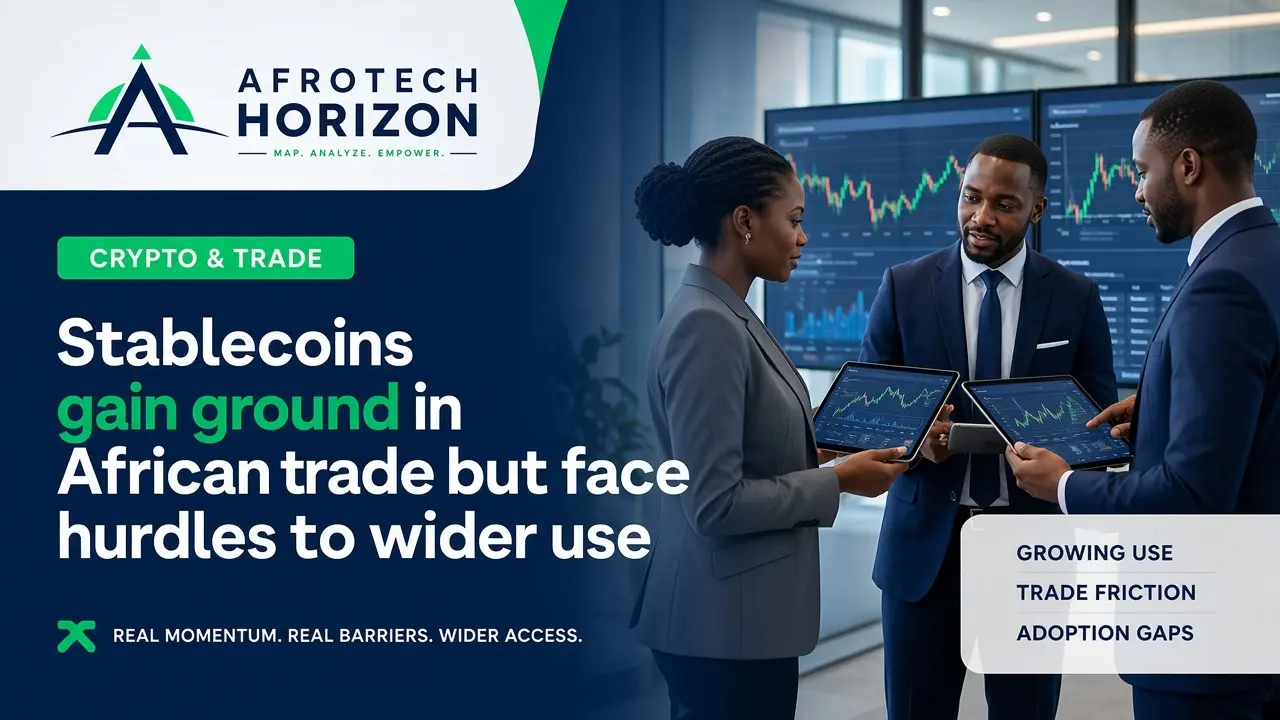
Dollar-linked stablecoins are emerging as a key settlement alternative for African businesses navigating strict foreign currency shortages and limited banking hours. Speaking on digital asset adoption across continental trade, fintech operators noted that while digital tokens offer critical liquidity, security fears, fee structures, and regulatory hurdles must be resolved to unlock widespread commercial usage.
Solving Access Limitations and Round-the-Clock Settlement For many commercial importers and cross-border traders, securing foreign currency through traditional banking institutions remains difficult, making USD-denominated stablecoins the most viable alternative.
Foreign Currency Accessibility: Businesses facing foreign exchange scarcity increasingly rely on digital dollars to fund global supplier orders.
Outside-Banking-Hours Transfers: According to Obiex operations head Odinaka Esiagu, stablecoin networks allow companies to settle international payments with overseas vendors across different time zones without waiting for domestic banks to open.
Sub-Saharan Market Inflows: Data from the International Monetary Fund indicates that Nigeria accounts for approximately 60 per cent of all stablecoin inflows into sub-Saharan Africa since 2019.
Cost Barriers, Hack Fears, and Policy Oversight Despite operational benefits, platform developers and financial authorities emphasize that consumer confidence and cost efficiency remain major bottlenecks.
Transaction Cost Reductions: Industry specialists including Chinonso Obiefule point out that developers must make international stablecoin transfers cheaper and simpler to make them commercially viable for small businesses.
Platform Security Concerns: High-profile reports of cryptocurrency platform breaches continue to deter potential users who remain hesitant to move capital onto digital asset rails.
Monetary Policy and Integrity Risks: The International Monetary Fund has cautioned that widespread adoption of dollar-denominated stablecoins could weaken local monetary policy transmission and create financial integrity risks, prompting calls for stricter regulatory oversight.
To explore further technical analysis on digital asset regulation, stablecoin liquidity, and cross-border payment infrastructure across Africa, visit AfroTech Horizon.
The Road Ahead for African Digital Assets The growing reliance on stablecoins highlights a fundamental demand for flexible, round-the-clock cross-border settlement. Addressing security vulnerabilities, lowering transfer costs, and establishing balanced regulatory frameworks will determine whether stablecoins transition from temporary workarounds to permanent rails for African trade.