
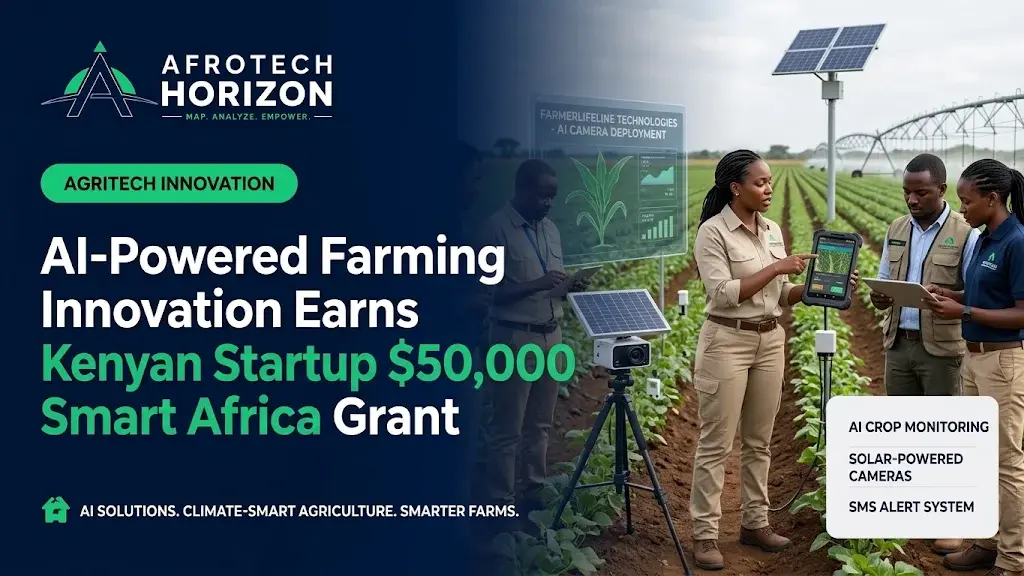
Kenya’s Farmerlifeline Wins $50,000 Grant to Expand AI-Powered Farming Technology
Kenyan agricultural technology startup Farmerlifeline Technologies has emerged as the winner of the third edition of the Innovate Africa Challenge, securing a US$50,000 grant to support the deployment of its artificial intelligence-powered farming solution. The recognition highlights the growing role of African technology companies in developing practical responses to agricultural challenges, particularly those affecting smallholder farmers.
Organised by Smart Africa, the Innovate Africa Challenge focuses on identifying and supporting AI solutions that can strengthen climate-smart agriculture across the continent. The third edition brought together 11 finalist teams from Ghana, Kenya, Malawi, Rwanda and Uganda, all presenting technologies designed to address different challenges within African agricultural systems.
Farmerlifeline Technologies secured the top position with a system that uses solar-powered AI cameras installed in agricultural fields to monitor crops and identify pests and diseases at an early stage. Rather than relying entirely on farmers to identify crop problems through physical inspection, the technology continuously monitors field conditions and helps detect potential threats before they spread.
Once a problem is identified, the system sends farmers SMS alerts containing treatment recommendations in their local languages. This communication approach is particularly relevant in rural communities where access to smartphones, reliable internet connections and digital agricultural services may be limited. By delivering information directly through mobile messaging, the solution seeks to make AI-supported crop protection more accessible to farmers.
The US$50,000 grant will support the next phase of the project, with the Kenyan team expected to deploy the technology over six months. This stage will move the solution beyond the competition environment and towards implementation in farming communities, where its effectiveness and practical value can be assessed.
The Innovate Africa Challenge was organised in partnership with the Food and Agriculture Organization of the United Nations (FAO), with additional support from the Norwegian Agency for Development Cooperation (Norad). The finalists participated in an intensive bootcamp and final pitching session in Kigali, Rwanda, where they presented their innovations to the programme's evaluators.
The competition attracted considerable interest, with 547 applications received for the 2026 edition. Its focus was on identifying solutions that could move beyond early-stage ideas and deliver measurable benefits through real-world deployment. This reflects a broader effort to support African innovators developing technologies that respond directly to the continent's development and climate challenges.
Farmerlifeline's achievement also builds on its previous recognition within the agricultural innovation ecosystem. The company, led by founder Esther Wanjiru Kimani, has developed AI-enabled crop protection technology designed to help smallholder farmers identify pests and diseases while reducing the time and resources required for manual monitoring. Its earlier recognition includes winning the 2024 Africa Prize for Engineering Innovation, further establishing its position within Africa's emerging agritech sector.
The company's approach addresses a significant challenge in agriculture: identifying crop threats early enough to prevent substantial damage. Pest infestations and plant diseases can reduce harvests, threaten farmers' incomes and contribute to food insecurity. Early detection can help farmers respond more quickly, while targeted treatment recommendations may support more informed decisions about agricultural inputs.
The six-month deployment phase will therefore be an important test of the technology's ability to deliver practical results beyond the recognition and funding it has received. Its performance, affordability and accessibility will be important factors in determining how widely the solution can be adopted.
Farmerlifeline's win reflects a wider opportunity for artificial intelligence to support African agriculture through locally developed technologies. From crop monitoring and weather forecasting to irrigation management and agricultural advisory services, AI-powered solutions are increasingly being developed to address challenges that directly affect food production and rural livelihoods.
As the deployment phase begins, the focus will shift from innovation to implementation. The extent to which Farmerlifeline can translate its technology into measurable improvements for farmers will offer an important indication of how AI can contribute to more resilient and productive agricultural systems across Africa.